
Real Estate Attorneys in Glendale, California
DiJulio Law Group is a real estate law firm at 330 North Brand Boulevard in Glendale. Our real estate lawyers handle boundary, easement, title, escrow, disclosure, and lease disputes, commercial and residential property litigation, and transactions for clients in Glendale, Burbank, Pasadena, and across Los Angeles County. Led by R. David DiJulio since 1985.
- Established
- 1985
- Office
- 330 N. Brand Blvd., Suite 1280, Glendale
- Languages
- English and Italian


Real Estate Disputes We Handle across Glendale and Los Angeles County
Real estate law covers land, buildings, title, and the contracts and leases tied to them; it is separate from estate planning. Choose the problem closest to yours, or its letter on the parcel, for a short answer on what California law looks at and where to read more.
Tap a letter on the parcel to open its answer.
-
A neighbor’s fence, wall, or structure crosses my property line
Start with a licensed land survey. If it confirms an encroachment, California law offers several paths: a recorded boundary line agreement, a quiet title action in Los Angeles County Superior Court to fix the line of record, trespass claims, or an injunction ordering removal. Courts can also grant an equitable easement when removal would be unfair, so how the structure got there matters. Hillside lots in Glendale, Montrose, and La Cañada Flintridge raise these questions often, because retaining walls and fences were frequently built without a survey.
-
Someone claims part of my land through years of use
Two claims look alike. Adverse possession transfers ownership, and California requires five years of open, hostile, continuous possession plus payment of the property taxes on the disputed land under Code of Civil Procedure section 325. A prescriptive easement grants only a right of use and has no tax requirement. Which one is alleged changes the defense.
-
My driveway, access, or shared easement is being blocked
An easement can be written into a deed, implied from how land was used when it was divided, or established by years of use. The owner of the burdened land generally cannot block or relocate it without consent. Remedies include declaratory relief defining the easement’s scope, an injunction to remove the obstruction, and damages.
-
The seller backed out after we signed a purchase agreement
A signed purchase agreement is a binding contract. When a seller refuses to close, the buyer can ask a court for specific performance, an order that forces the sale, because California treats each parcel of real property as unique. Buyers often record a lis pendens so the seller cannot sell to someone else while the case is pending.
-
We found defects or mold the seller did not disclose
Sellers of one-to-four unit homes must complete a Transfer Disclosure Statement under Civil Code section 1102 and the sections that follow. An undisclosed leak, foundation problem, or mold condition can support claims for fraud, negligent misrepresentation, or breach of contract, and sometimes claims against the agents. Inspection reports and repair records become key evidence.
-
We have a lease dispute with a tenant or landlord
Most lease disputes turn on the written terms: rent, repair and maintenance duties, assignment, default notices, and what happens when a business is forced to close. For residential units, local ordinances in Glendale, Los Angeles, and Pasadena add rules on rent increases, just-cause evictions, and relocation payments that a lease cannot waive, and the statewide Tenant Protection Act applies where no local rule does.
-
A zoning, permit, or land-use decision is blocking my plans
Zoning disputes are usually decided on the administrative record. Notices of violation, permit denials, and conditions of approval each carry appeal deadlines at the city or county level before any court review. Claims that a use is legally nonconforming, or grandfathered, depend on exactly how the property was used and when.
-
We are behind on the mortgage or facing foreclosure
Most California home foreclosures are nonjudicial: the lender records a notice of default, then a notice of trustee’s sale, and can sell without a lawsuit. Each step has required notices and waiting periods, and a borrower can challenge a completed sale that rested on a void assignment of the loan. Service members on active duty have added protections under federal law.

A word from our firm
“Our clients in Glendale and across Los Angeles County come to us with real problems: a boundary line, a purchase contract, a lease, a building project, a business dispute. These matters can affect a home, a livelihood, and a family’s plans, and we take that responsibility seriously.”
“Our role is to listen carefully, explain the legal options in plain terms, and build a practical strategy around the facts, California law, and the client’s goals.”

Three Best Rated, Best Business of 2024, a third-party listing
Practice Areas of a Glendale Law Firm Built Around Property
Real estate is the primary practice. Five connected practices handle the business, construction, environmental, and data questions that property matters in Los Angeles County often raise.
Most clients arrive with one problem that touches several areas of law: a purchase contract with a construction defect behind it, a commercial lease with a business partner dispute inside it, a parcel with a contamination history. One Glendale office handles each piece, in litigation or in mediation, with the same attorneys throughout.
Real Estate Law
The firm’s primary practice
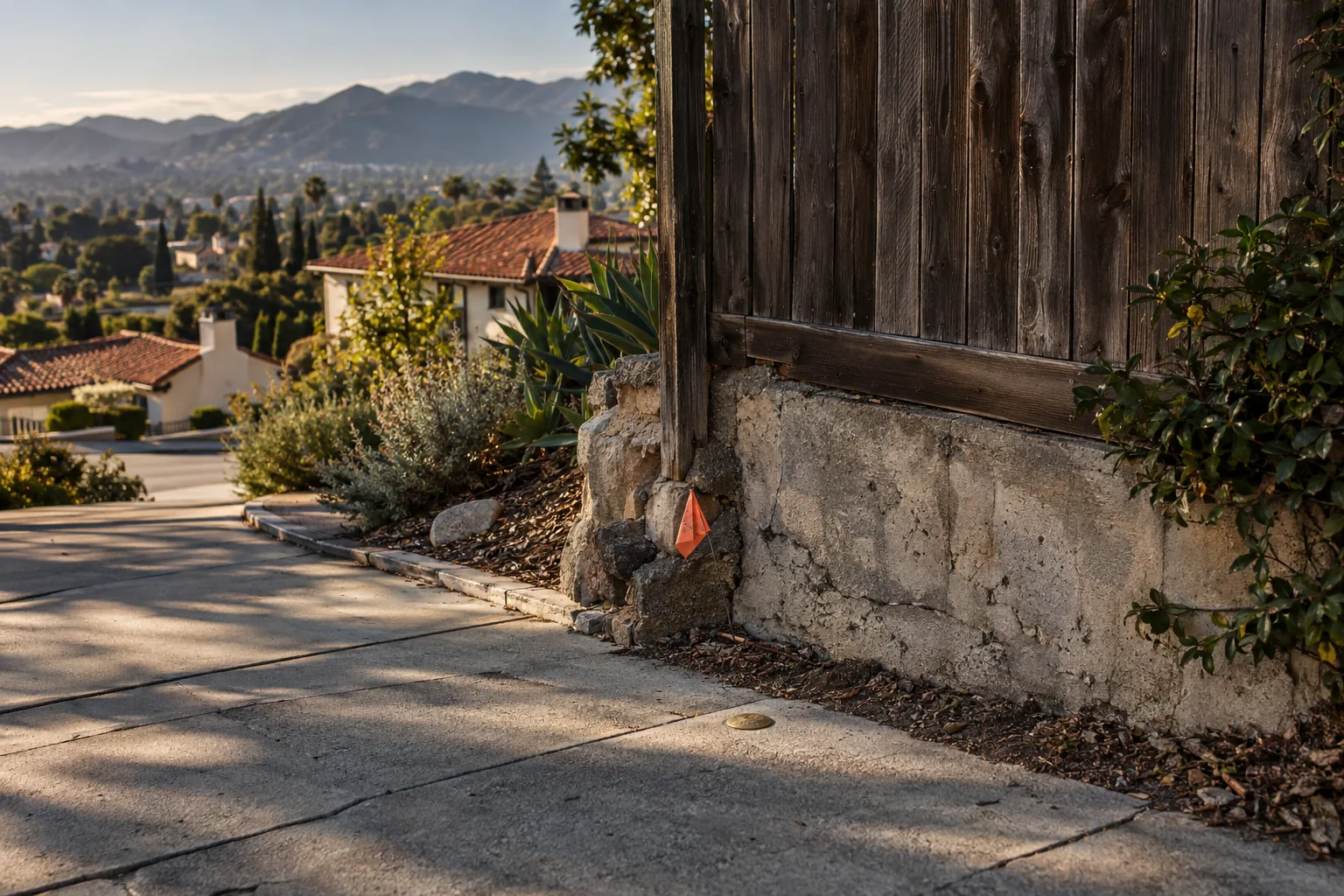
Real estate litigation and transactions for owners, buyers, sellers, landlords, and investors in Glendale and across Los Angeles County: boundary and easement disputes, title and escrow problems, failure-to-disclose claims, commercial and residential leases, foreclosure defense, and purchase and sale agreements.
Explore real estate law-

Business & Corporate Law
Business lawyers for Glendale and Los Angeles companies: commercial contracts, entity formation, governance, and partner or shareholder disputes, including cross-border work with China.
-

Construction Law
Construction attorneys for Los Angeles County projects: contracts, mechanics liens, payment and collection claims, defects, delays, and change orders for owners, contractors, and developers.
-

Mediation
Confidential mediation of real estate, business, construction, and environmental disputes, conducted by a Pepperdine-trained mediator in Glendale. Mediation is a separate service from litigation: the firm serves as the neutral, not as counsel for either side.
-
Environmental Law
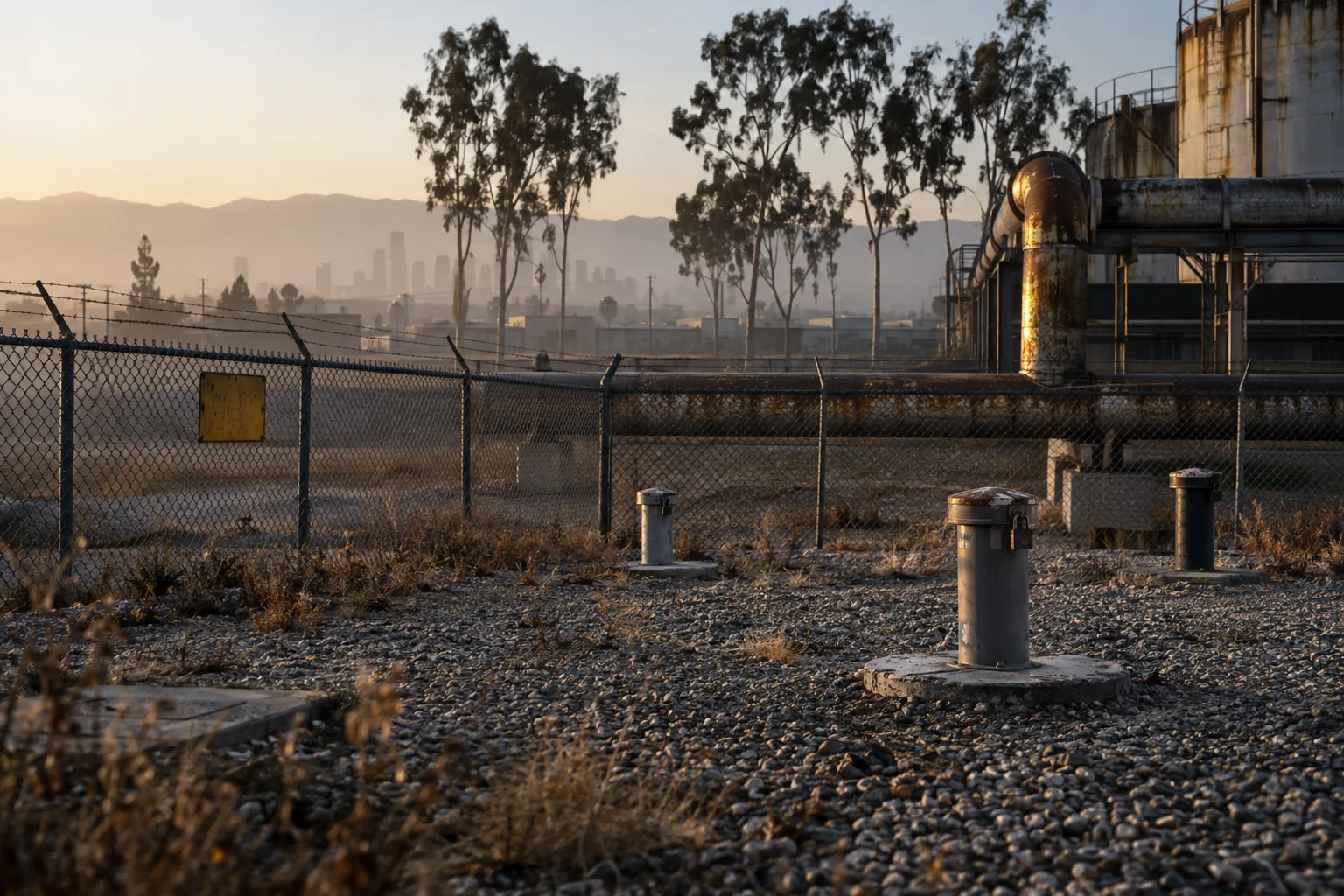
Environmental attorneys for Los Angeles businesses and property owners: RCRA hazardous waste, Clean Air Act and Clean Water Act matters, enforcement defense, and site remediation, informed by R. David DiJulio’s master’s degree in environmental science.
-

Cybersecurity & Data Privacy
Data breach response, CCPA and CPRA compliance, CIPA defense, and privacy litigation for California businesses and individuals.
-
Also handled by the firm
The firm also handles intellectual property litigation, general liability, products liability, personal injury, and employment-based visas.
Clients the firm has represented include Nestlé USA, Kittrich Corporation, Maxon, United Overseas Bank, and Interscape Construction.
Hear From R. David DiJulio
Glendale real estate attorney and managing partner, admitted in California since 1983, in his own words.
In this interview, R. David DiJulio discusses his work as a real estate attorney for property owners, buyers, sellers, and businesses in Glendale and Los Angeles. A few minutes with him is the quickest way to decide whether DiJulio Law Group is the right firm for your matter.

Representative Clients companies and organizations represented by our firm
Global food and consumer-products companies, an international bank, a software developer, a sailboat builder, and a commercial construction firm have relied on DiJulio Law Group in real estate, business, and construction matters across Glendale, Los Angeles, and Southern California.
-
 Nestlé USA
Global food and beverage
(opens in a new tab)
Nestlé USA
Global food and beverage
(opens in a new tab)
-
 Kittrich Corporation
Consumer products manufacturing
(opens in a new tab)
Kittrich Corporation
Consumer products manufacturing
(opens in a new tab)
-
 Maxon
3D and motion design software
(opens in a new tab)
Maxon
3D and motion design software
(opens in a new tab)
-
 Catalina Yachts
Sailboat manufacturing
(opens in a new tab)
Catalina Yachts
Sailboat manufacturing
(opens in a new tab)
-
 United Overseas Bank
International banking
(opens in a new tab)
United Overseas Bank
International banking
(opens in a new tab)
-
 Interscape Construction
Commercial construction
(opens in a new tab)
Interscape Construction
Commercial construction
(opens in a new tab)
The Attorneys Who Handle Your Matter
A managing partner admitted in California since 1983, and a trial attorney admitted in California and New York.
DiJulio Law Group is a small Glendale firm by design. Clients work directly with the attorneys who review their documents, negotiate on their behalf, and appear in Los Angeles County Superior Court and the federal courts.

R. David DiJulio
Managing Partner
Represents clients in real estate, construction, business, land use, environmental, and mediation matters, with roughly three-quarters of his practice devoted to litigation.
- Admitted
- California, 1983. U.S. federal court, 1985.
- Mediation
- Pepperdine-trained mediator
- Education
- J.D., Southwestern University School of Law. M.S., Environmental Science, Drexel University.
- Bar leadership
- Former President, Glendale Bar Association

Valeria Granata
Senior Litigator & Trial Attorney
Litigates real estate, construction, business, and privacy disputes in state and federal court, after nearly ten years of defense-side litigation at national firms.
- Admitted
- California, 2015. New York, 2016.
- Federal courts
- Ninth Circuit Court of Appeals. Central, Eastern, and Southern Districts of California.
- Education
- LL.M., Loyola Law School, Los Angeles. J.D., Catholic University of Milan.
- Languages
- English and Italian
- 1983R. David DiJulio admitted to the California Bar
- 1985Begins leading DiJulio Law Group in Glendale and is admitted to federal court
- 2015Valeria Granata admitted to the California Bar
- 2016Valeria Granata admitted to the New York Bar
Want to know which attorney fits your matter? Request a consultation or call (818) 502-1700.
License status for any California attorney can be checked with the State Bar of California attorney search.
How a California Property Dispute Moves Toward Resolution
In California, most real estate disputes move through four stages: document review, a written demand and negotiation, mediation, and litigation in superior court. Many end before trial, and each stage is prepared as though trial could follow.
-
Review the documents
We read the deed, preliminary title report, survey, purchase contract, disclosures, lease, notices, and correspondence, then explain what California law likely provides and what a realistic result looks like.
-
Demand and negotiation
A demand letter built on the specific statutes and contract terms at issue can open a negotiated resolution, such as a recorded boundary agreement, a written easement, or an amended contract.
-
Mediation
A neutral mediator helps both sides settle. Under Evidence Code section 1119, what is said in mediation is generally confidential, a rule the California Supreme Court applied strictly in Cassel v. Superior Court.
Real estate mediation -
Litigation and trial
When a dispute cannot be resolved, the case is filed in Los Angeles County Superior Court and prepared for trial, where a judge can quiet title, order specific performance or partition, issue an injunction, or award damages.
Frequently asked questions
California Property Law, explained through the cases
Plain-English analyses of the California decisions behind boundary, easement, partition, rent, and disclosure disputes, written for Glendale and Los Angeles property owners and updated as new opinions are published.
Court of Appeal, Fourth District(2016) 4 Cal.App.5th 982
Nellie Gail Ranch Owners Association v. McMullin
A couple built a retaining wall of roughly $150,000 on about 6,100 square feet of association land. Their adverse possession claim failed. The analysis explains why, and which routes to ownership or use can still succeed.
Read the Nellie Gail analysis-
Supreme Court of California(2024) 15 Cal.5th 680
Romero v. Shih
There is no blanket prohibition on an implied easement that is effectively exclusive. The dispute began with a shared driveway in Sierra Madre.
-
Court of Appeal, Fourth District, Division One2025, No. D082158
Amundson v. Catello
Heirs cannot force a partition sale of inherited real estate while the estate is still in probate.
-
Court of Appeal, Second District2026, No. B336071
Apartment Association of Greater Los Angeles v. City of Los Angeles
The city’s relocation assistance mandate is preempted by the Costa-Hawkins Rental Housing Act. Its eviction threshold rule stands.
-
Legal guideSeller and landlord disclosure
California Mold Disclosure Law
California’s 2001 mold disclosure statute never took effect. Liability for undisclosed mold runs through the Transfer Disclosure Statement and fraud law instead.
Client Reviews from Glendale and Los Angeles clients on Google
Reviews describe individual experiences. Every matter turns on its own facts, and past results do not guarantee a similar outcome.


CLIENT TESTIMONIALS
What Clients Say About DiJulio Law Group








Talk With a Glendale Real Estate Attorney
Consultations are free and confidential. Bring the deed, contract, survey, notices, or photos you have, and a Glendale real estate lawyer will review them with you.
Glendale office
DiJulio Law Group330 North Brand Boulevard, Suite 1280Glendale, California 91203
- Phone
- (818) 502-1700
- Hours
- Monday through Sunday, 9:00 a.m. to 6:30 p.m.
- Serving
- Glendale, Burbank, Pasadena, La Cañada Flintridge, Montrose, La Crescenta, Eagle Rock, and communities across Los Angeles County
Parla italiano? L’avvocato Valeria Granata assiste i clienti in italiano. Visita il sito in italiano
Real Estate Law Questions Glendale and Los Angeles Clients Ask
Short answers to the questions people search before they call a real estate attorney. Each one links to a fuller guide on this site.
These answers are general information about California law, not legal advice for a specific matter. For advice on your property, request a consultation or call (818) 502-1700.
Read the full FAQDo I need a real estate attorney in Glendale, CA?
You need a real estate attorney when money, title, or possession of property is at stake and the other side disagrees with you: a boundary or easement dispute, a seller who refuses to close, undisclosed defects, a lease default, or a foreclosure notice. Real estate agents and escrow officers cannot give legal advice or represent you in court. DiJulio Law Group handles these matters from its Glendale office for clients across Los Angeles County.
How do you resolve a real estate dispute in California?
Most California real estate disputes move through four stages: a review of the deed, title report, survey, contract, and correspondence; a written demand and negotiation; mediation with a neutral; and, if needed, a lawsuit in superior court. Many matters settle before trial, often with a recorded agreement that fixes the boundary, easement, or contract terms going forward.
What is a quiet title action in California?
A quiet title action is a lawsuit asking the superior court to decide who owns a property, or an interest in it, and to settle competing claims of record. Glendale property owners use it to fix a boundary after a survey, clear an old lien or deed defect, or resolve an adverse possession or easement claim. The judgment binds everyone named in the case.
What is adverse possession in California, and why is it rare?
Adverse possession lets someone gain title to land by possessing it openly, continuously, and without permission for five years. California also requires the claimant to have paid the property taxes on that land for all five years under Code of Civil Procedure section 325. Because the taxes are almost always assessed to the record owner, claims rarely succeed; a prescriptive easement, which grants use rather than ownership, is far more common.
Adverse possession claims and defenseNellie Gail Ranch v. McMullin
Can a seller back out of escrow in California?
Only if the purchase agreement gives the seller a contingency or the buyer has defaulted. Otherwise a signed California purchase agreement binds the seller, and a buyer can sue for specific performance, a court order forcing the sale, because each parcel of real property is treated as unique. Buyers usually record a lis pendens so the property cannot be sold to someone else while the case is pending.
When a seller refuses to closePurchase and sale transactions
Can I sue the seller for not disclosing defects?
Yes, when the seller knew about a material defect and did not disclose it. California sellers of one-to-four unit homes must complete a Transfer Disclosure Statement under Civil Code section 1102. An undisclosed leak, foundation problem, or mold condition can support claims for fraud, negligent misrepresentation, or breach of contract, and sometimes claims against the agents. Inspection reports and repair records are the key evidence.
Can I sue my landlord for mold in California?
A tenant can bring claims when a landlord knew about a mold condition, or the leak causing it, and failed to repair it within a reasonable time after notice. California's implied warranty of habitability and the state housing code treat visible mold and chronic moisture as substandard conditions. Document the condition in writing, photograph it, and keep every repair request; those records decide most cases.
Does Pasadena have rent control?
Yes. Pasadena voters approved a rent control and just-cause eviction charter amendment, Measure H, in November 2022, administered by the Pasadena Rental Housing Board. Nearby rules differ: Glendale has a just-cause eviction ordinance but no rent cap, and the City of Los Angeles applies its Rent Stabilization Ordinance to older buildings. Statewide, the Tenant Protection Act limits increases where no local law applies.
The Pasadena rent control challengeCosta-Hawkins and Los Angeles
Can a property owner block an easement?
Generally no. The owner of the burdened land cannot block, narrow, or relocate a valid easement without the easement holder's consent, whether the easement was written into a deed, implied when the land was divided, or established by years of use. A court can declare the easement's scope, order an obstruction removed, and award damages. Gates and landscaping that interfere with access are the most common disputes.
How does real estate mediation work in California?
A neutral mediator meets with both sides, usually in a single session, to help them reach a written settlement. Under Evidence Code section 1119, what is said in mediation is confidential and cannot be used later in court. R. David DiJulio is a Pepperdine-trained mediator and serves as the neutral in real estate, business, construction, and environmental disputes.